

Effective Summer Pest Control Tips for Tracy, CA Residents: What 100°F Heat Does to Your Pest Problem
Summer pest control tips Tracy CA become critical when temperatures hit 100°F. Tracy’s brutal heat doesn’t just make you uncomfortable, it drives cockroaches and spiders straight into your air-conditioned home while triggering peak wasp activity that lasts through September.
Key Takeaways:
- Cockroaches move indoors 3x faster when outdoor temperatures exceed 95°F for consecutive days
- Wasp populations peak July through September, with aggressive behavior increasing near outdoor dining areas
- Argentine ant surface nesting spikes 400% during summer irrigation cycles in Tracy’s residential zones
Why Do I Have More Bugs in Summer Heat?

Heat-driven pest displacement is the mass migration of insects and arachnids from outdoor habitats to cooler indoor environments when temperatures exceed their survival thresholds. This means your home becomes a thermal refugium during Tracy’s scorching summers, attracting pests that would normally stay outside. Follow our summer pest control tips Tracy CA to deal with them or call our specialist technicians to help you deal with them.
The 95°F threshold triggers this behavior change across multiple species. German cockroaches begin seeking cooler indoor spaces at this temperature. Spiders follow their prey indoors. Even outdoor species like earwigs start probing for entry points when concrete and soil temperatures become lethal.
Tracy’s urban heat island effect makes this worse. Asphalt and concrete surfaces reach 120°F+ during peak afternoon hours, creating temperature gradients that funnel pests toward the nearest cool zone, your house. The temperature differential between outdoor and indoor spaces can exceed 40°F during heat waves, making your home irresistible to heat-stressed insects.
This isn’t random pest activity. You’re dealing with survival-driven migration patterns that follow predictable timelines tied to consecutive days above 95°F.
Which Pests Spike During Tracy’s Summer Heat Waves?
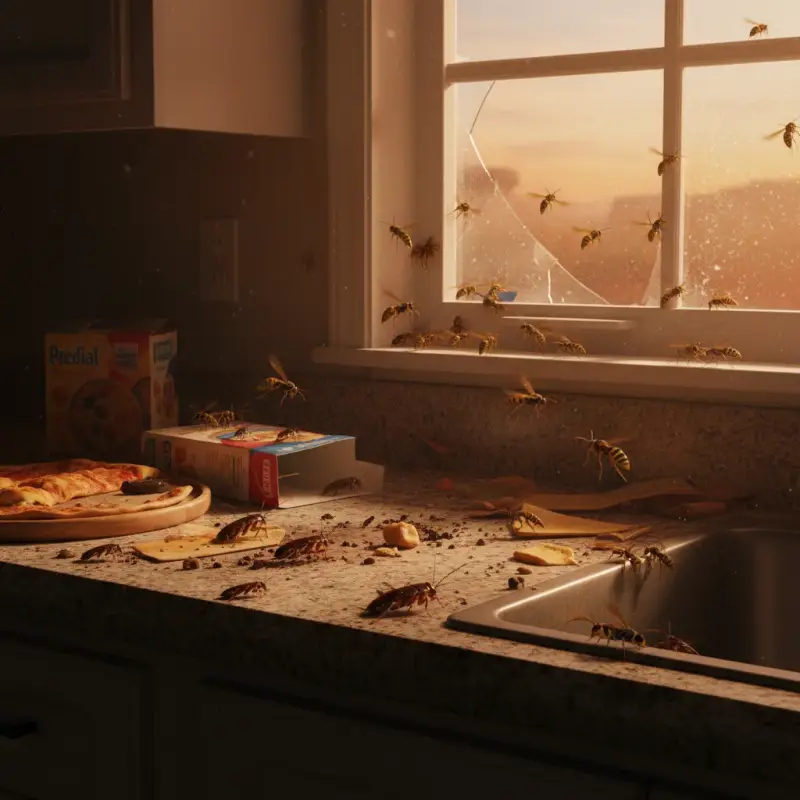
Heat waves trigger species-specific pest activity patterns, with each pest following distinct seasonal cycles tied to temperature thresholds and breeding patterns.
| Pest Species | Peak Activity Months | Primary Indoor Targets | Activity Increase |
|---|---|---|---|
| German Cockroaches | June-August | Kitchens, bathrooms | 250% in commercial areas |
| Wasps | July-September | Outdoor dining, trash areas | Colony size peaks 5,000+ |
| Spiders | July-August | Following prey indoors | 200% indoor sightings |
| Earwigs | June-July | Basements, laundry rooms | 150% moisture-seeking |
| Ants (Argentine) | May-September | Kitchen, pet food areas | 400% surface activity |
German cockroaches show the most dramatic spike, increasing 250% in commercial kitchens during 100°F+ periods. They can’t regulate body temperature and die quickly in extreme heat, making indoor migration a survival necessity.

Wasps peak differently. Their colonies grow throughout summer, reaching maximum size and aggression by August. Unlike cockroaches fleeing heat, wasps become more active and territorial as their populations explode.
Spiders don’t migrate for temperature reasons, they follow food. When cockroaches and other prey move indoors, spiders follow. This creates a cascade effect where one pest problem triggers another.
How Does 100°F Heat Change Cockroach Behavior in Tracy Homes?
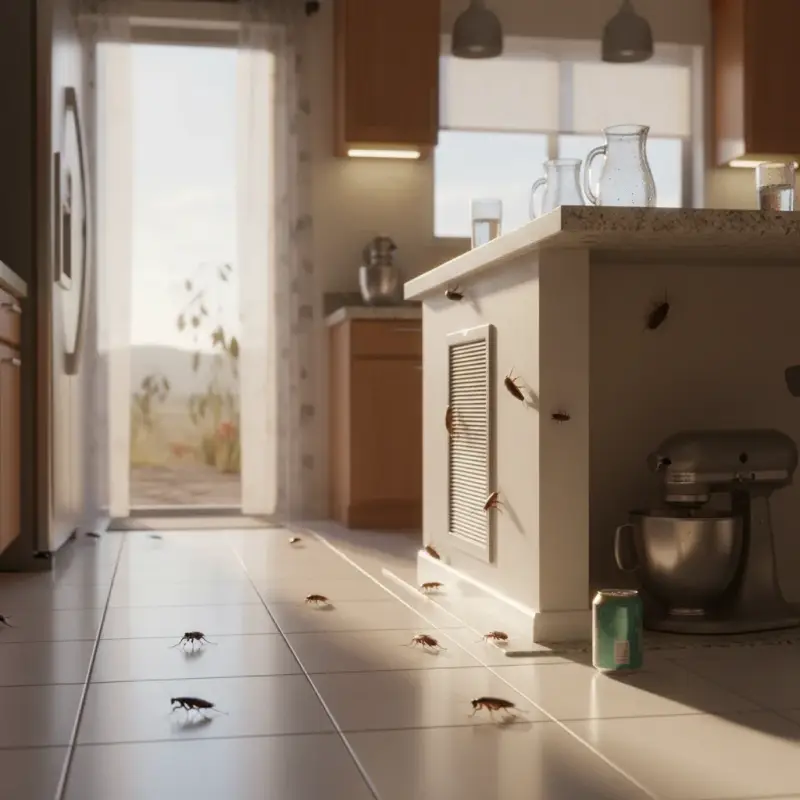
Heat-driven cockroach migration targets air-conditioned indoor spaces with reliable moisture sources and stable temperatures between 70-80°F. Cockroaches can’t survive prolonged exposure to temperatures above 95°F, making your cool home their only viable habitat during heat waves.
Kitchens and bathrooms become primary targets because they offer both temperature relief and water access. Cockroaches need constant hydration during heat stress, making them gravitate toward pipes, drains, and appliance condensation. Food debris provides energy for temperature regulation, explaining why kitchen infestations spike first.
Their activity timing shifts during extreme heat. Normal nocturnal patterns break down when outdoor temperatures stay above 90°F through the night. You’ll see daytime activity as cockroaches seek immediate relief from heat stress. This desperation makes them less cautious about human presence.
Cockroach indoor sightings increase 300% when outdoor temperatures stay above 95°F for 3+ consecutive days. The timing matters, single-day heat spikes don’t trigger mass migration, but sustained heat creates population pressure that forces indoor movement. This pattern explains why pest control calls spike during Tracy’s multi-day heat waves, not isolated hot days.
When Do Wasps Peak Around Tracy’s Outdoor Entertainment Areas?

Wasp population peak occurs July through September, following a predictable escalation pattern that puts outdoor dining areas at maximum risk during late summer months.
Colony establishment (May-June): Queens start new colonies with 50-100 workers. Minimal human interaction during this growth phase.

Rapid expansion (July): Worker populations explode to 1,000-3,000 individuals. Foraging behavior intensifies around protein and sugar sources.
Peak aggression (August-September): Colonies reach maximum size of 5,000+ individuals by August in Tracy. Workers become territorial around food sources as colony resources max out.
Scavenging desperation (September-October): Natural food sources decline while colony size remains high. Wasps aggressively target human food, drinks, and garbage.
Outdoor dining areas hit peak danger during steps 3 and 4. August barbecues face maximum wasp pressure as mature colonies compete for limited resources. September outdoor events deal with desperate, aggressive wasps whose natural food sources are declining but whose populations remain at annual highs.
The timing creates a perfect storm, your outdoor entertaining season peaks just as wasp colonies reach their most aggressive phase.
How Does Irrigation Timing Affect Argentine Ant Surface Activity?
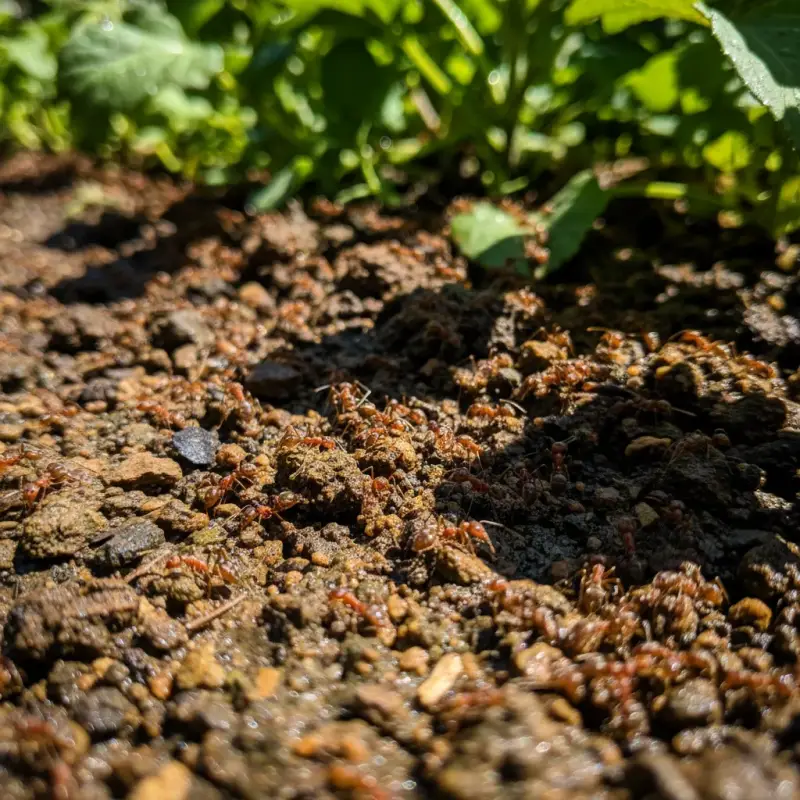
Irrigation timing drives Argentine ant surface nesting patterns because water availability determines where super-colonies establish surface foraging trails and satellite nest sites. Argentine ants build shallow nests in moist soil, making irrigation the primary factor controlling their surface activity.
Evening watering creates perfect conditions for overnight surface expansion. Ants establish new trails during cool nighttime hours when soil moisture is high and temperatures are tolerable. Morning irrigation before 7 AM reduces surface ant activity by 60% compared to evening watering because it eliminates the overnight moisture advantage.
The super-colony structure amplifies this effect. Argentine ants don’t compete with each other, they cooperate across property lines. When one yard’s irrigation schedule triggers surface activity, neighboring properties see immediate spillover as the colony redirects foraging efforts toward new moisture sources.
Heat stress during 100°F+ days forces surface colonies deeper underground by mid-day, but they resurface aggressively during evening hours if moisture is available. This creates the classic “ant highway” pattern homeowners see along irrigation lines and hose connections during Tracy’s summer heat.
What Summer Pest Control Methods Work in 100°F+ Heat?
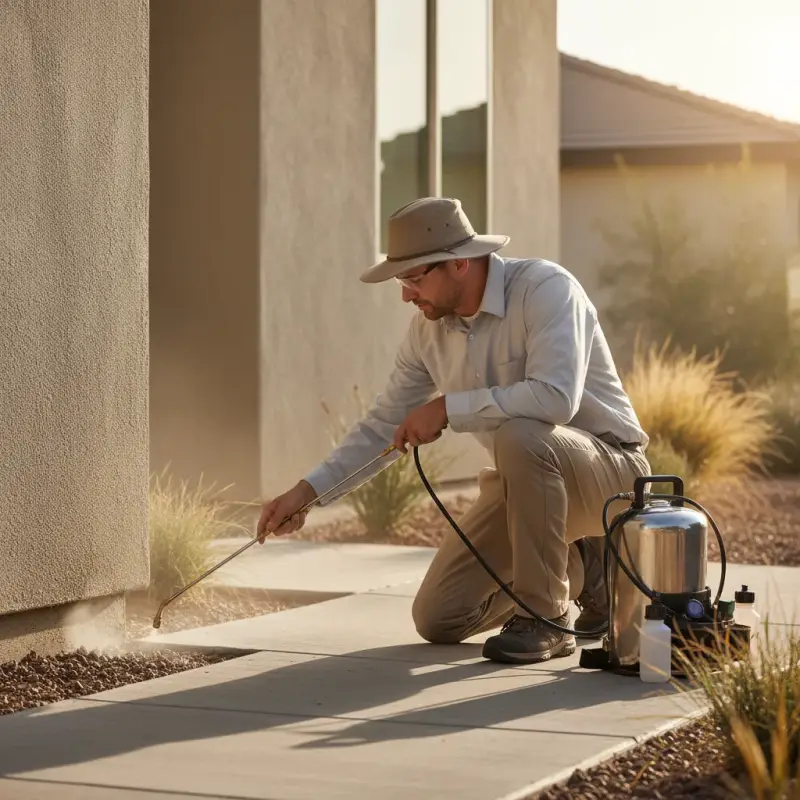
Non-repellent transfer spray maintains effectiveness during extreme heat because active ingredients don’t volatilize at high temperatures like contact sprays do. This makes targeted applications the foundation of summer pest management.
Non-repellent barrier treatments: Fipronil-based products maintain 85% effectiveness at 100°F+ while contact sprays drop to 40% effectiveness. Apply to shaded areas during early morning for maximum residual.
Heat-resistant bait stations: Granular baits in ventilated stations outperform gel baits that liquefy above 95°F. Place stations in microclimates under eaves or dense shrubs where temperatures stay 10-15°F cooler.
Perimeter barrier treatment timing: Apply treatments before 8 AM or after 7 PM when surface temperatures drop below 90°F. Midday applications on hot concrete create chemical breakdown and reduced effectiveness.
Integrated pest management focus: Combine moisture reduction, entry point sealing, and targeted treatments. Heat-stressed pests congregate in predictable areas, making targeted approaches more effective than broadcast spraying.
Bait station placement adjustments: Move stations to cooler microclimates during peak summer. North-facing walls, under deck areas, and dense vegetation provide 15-20°F temperature reduction that preserves bait integrity.
Contact sprays fail in extreme heat because volatile organic compounds evaporate before pests contact treated surfaces. This timing issue explains why summer pest problems persist despite homeowner spray applications during the hottest parts of the day.
Frequently Asked Questions
Should I increase pest control frequency during heat waves in Tracy?
Heat waves above 95°F trigger increased indoor pest activity, making monthly treatments more effective than quarterly during July through September. Non-repellent treatments maintain better performance than contact sprays in extreme heat, but application timing becomes critical for effectiveness.
Why do spiders suddenly appear indoors during Tracy’s summer heat?
Spiders follow their prey indoors when cockroaches and other insects seek cool refugia during 100°F+ temperatures. This heat-driven migration peaks during the hottest afternoon hours when outdoor temperatures become lethal for both prey species and the spiders that hunt them.
Do bait stations work differently in Tracy’s summer heat?
Gel baits can liquefy above 95°F, reducing effectiveness, while granular baits in shaded stations maintain potency. Bait station placement should shift to cooler microclimates during peak summer months, targeting areas under eaves or dense vegetation where temperatures stay 10-15°F lower than ambient air temperature.