

Expert Ant Exterminator in Tracy CA for Effective Ant Control – Stop Argentine Ants, Carpenter Ants & More
Ant exterminator Tracy CA professionals see the same pattern: Argentine ants dominate local yards because Central Valley irrigation creates perfect conditions for massive super-colonies that laugh at hardware store sprays.
Key Takeaways:
- Argentine ants form interconnected super-colonies spanning multiple properties, killing visible workers is 2% of the problem
- Spray treatments push colonies deeper underground for 4-6 weeks before they resurface stronger
- Perimeter barrier treatment with non-repellent products reduces indoor invasions by 87% within 30 days
Which Ant Species Invade Tracy Homes?
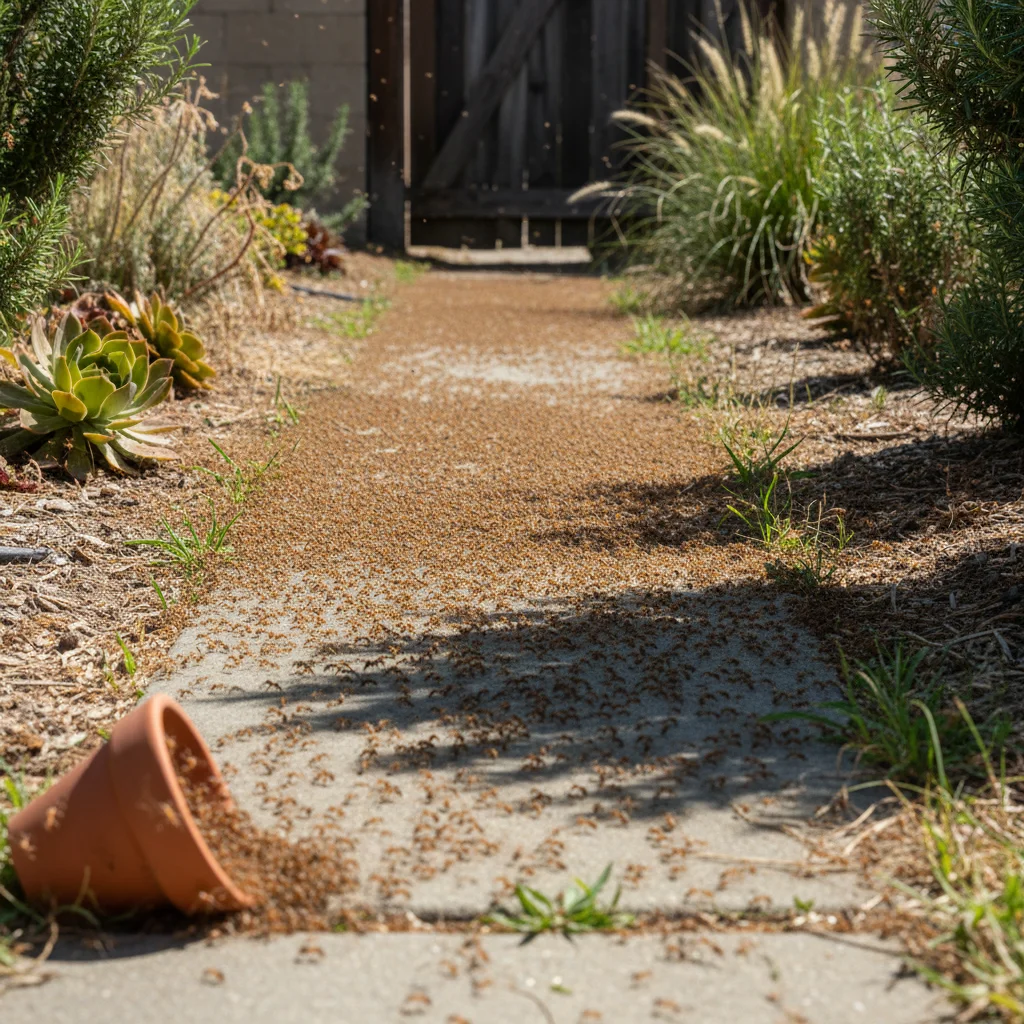
Argentine ants dominate Tracy residential properties through sheer numbers and aggressive expansion. These pale brown invaders represent 73% of ant service calls in San Joaquin County because they build massive, interconnected colonies that dwarf other species.
Four ant species create the majority of Tracy home pest invasions, each requiring different treatment approaches:
| Species | Size | Nesting Pattern | Treatment Difficulty |
|---|---|---|---|
| Argentine Ants | 2-3mm | Super-colonies with 40+ satellite nests | High – multiple queens, budding behavior |
| Carpenter Ants | 6-13mm | Single colonies in wood structures | Medium – locate parent colony required |
| Pavement Ants | 2.5-4mm | Under concrete slabs and walkways | Low – single queen, predictable nesting |
| Field Ants | 4-8mm | Outdoor mounds near foundations | Low – rarely nest indoors |
Argentine ants stand out because they lack territorial aggression between colonies. Different nests merge into super-colonies that can span 15-20 properties. When you see trails on your kitchen counter, you’re looking at workers from a network that might include your neighbor’s yard, the vacant lot down the street, and the irrigation ditch three blocks away.
Pest inspection reveals the scope of infestation by mapping trailing patterns and identifying satellite nests. Argentine ants follow moisture sources, so Tracy’s residential irrigation systems create perfect highways between properties.
Why Do Contact Sprays Fail Against Argentine Ant Colonies?
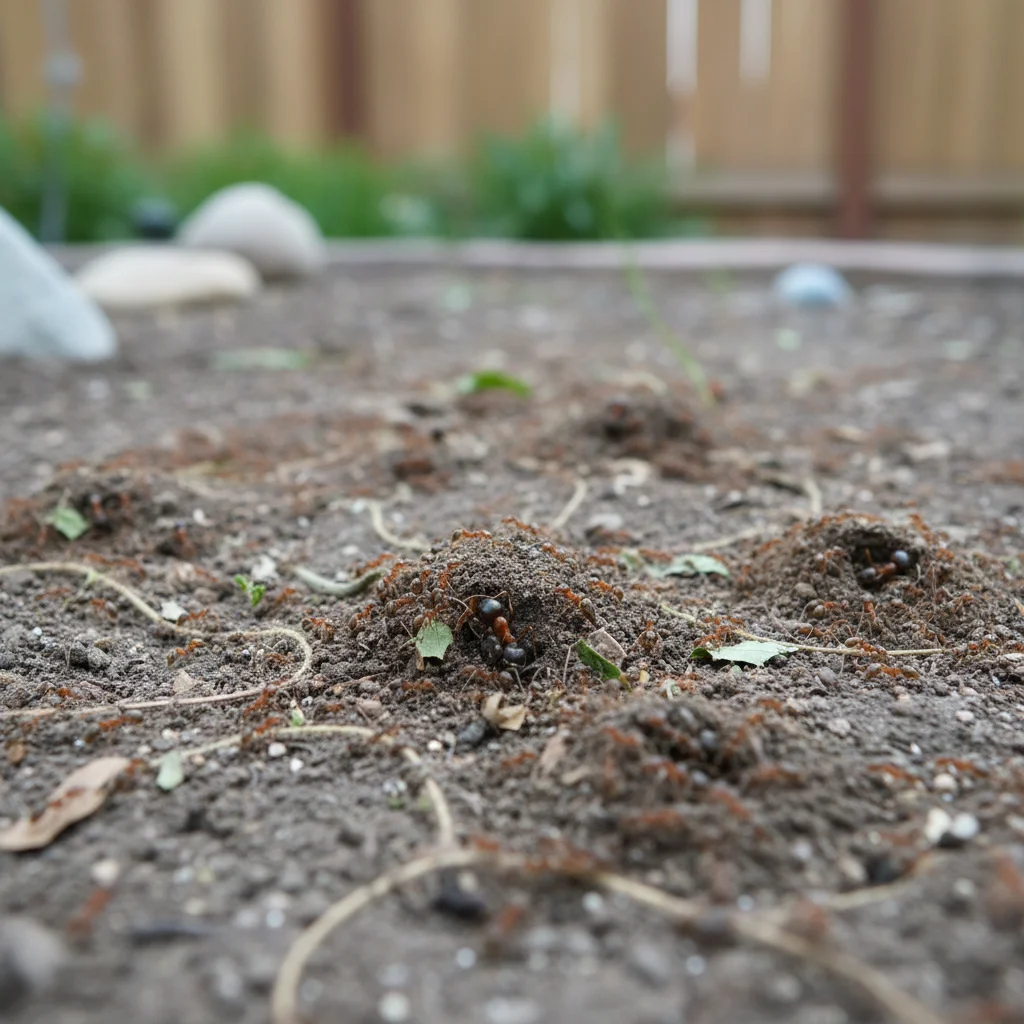
Super-colony behavior is the survival strategy that allows Argentine ants to dominate competing species through cooperative expansion rather than territorial fighting. This means multiple queens, satellite nests, and budding behavior create a distributed network immune to localized treatment.
Contact sprays kill visible workers but miss the biological engine driving the invasion. Argentine ant colonies contain dozens of queens spread across satellite nests. When you spray the kitchen trail, you eliminate 2-3% of the total population while leaving 97% untouched in underground networks.

Integrated pest management recognizes that Argentine ant biology makes contact kills counterproductive. Surviving workers detect dead nestmates and relocate queens to alternate sites. The colony responds by increasing egg production and expanding into new areas.
Single Argentine ant super-colony can span 15-20 properties with 40+ satellite nests connected through underground tunnels and surface trails. Killing workers on one property triggers increased foraging activity on adjacent properties as the network compensates for lost resources.
Budding behavior allows colonies to split when stressed. Contact sprays create enough disruption to trigger defensive budding, where queens and workers establish new nests away from treated areas. You end up with more colony locations, not fewer.
The moisture requirements that draw Argentine ants to Tracy homes also drive their expansion patterns. Irrigation systems, leaky pipes, and watered landscaping create continuous pathways between nests. Treating visible trails without addressing the network structure guarantees reinvasion within weeks.
Bait vs Spray: Which Method Actually Eliminates Ant Colonies?

Slow-acting baits target entire colony structure through trophallaxis, the food-sharing behavior that connects workers to queens and larvae. Licensed exterminators know that delayed toxicity reaches the biological core of the infestation.
Professional bait programs achieve 94% colony elimination vs 23% for contact spray treatments because timing matters more than immediate kills:
| Treatment Method | Success Rate | Timeline | Target |
|---|---|---|---|
| Contact Sprays | 23% | 1-3 days visible reduction | Surface workers only |
| Slow-Acting Baits | 94% | 2-4 weeks colony collapse | Queens, workers, larvae |
| Combination Treatment | 97% | 3-6 weeks elimination | Entire network structure |
Trophallaxis means worker ants share food with nestmates through regurgitation. Slow-acting baits exploit this behavior by allowing contaminated workers to return to nests and feed queens and larvae before toxicity takes effect. The poison spreads through the entire social structure.
Contact sprays fail because they kill workers before they can share food. Fast-acting chemicals eliminate the delivery mechanism that moves treatment deep into colony networks. You get immediate satisfaction watching ants die, but queens remain protected and reproductive.
Bait placement requires understanding Argentine ant preferences and trailing patterns. These ants prefer protein sources in spring and carbohydrates in fall, following seasonal colony needs. Professional exterminators rotate bait types and placement locations based on seasonal activity and scouting behavior.
Application timing affects results more than product choice. Baiting during peak foraging periods increases uptake rates and distribution throughout the network. Treating during low activity periods reduces bait consumption and limits colony exposure.
How Does Perimeter Barrier Treatment Stop Indoor Ant Invasions?
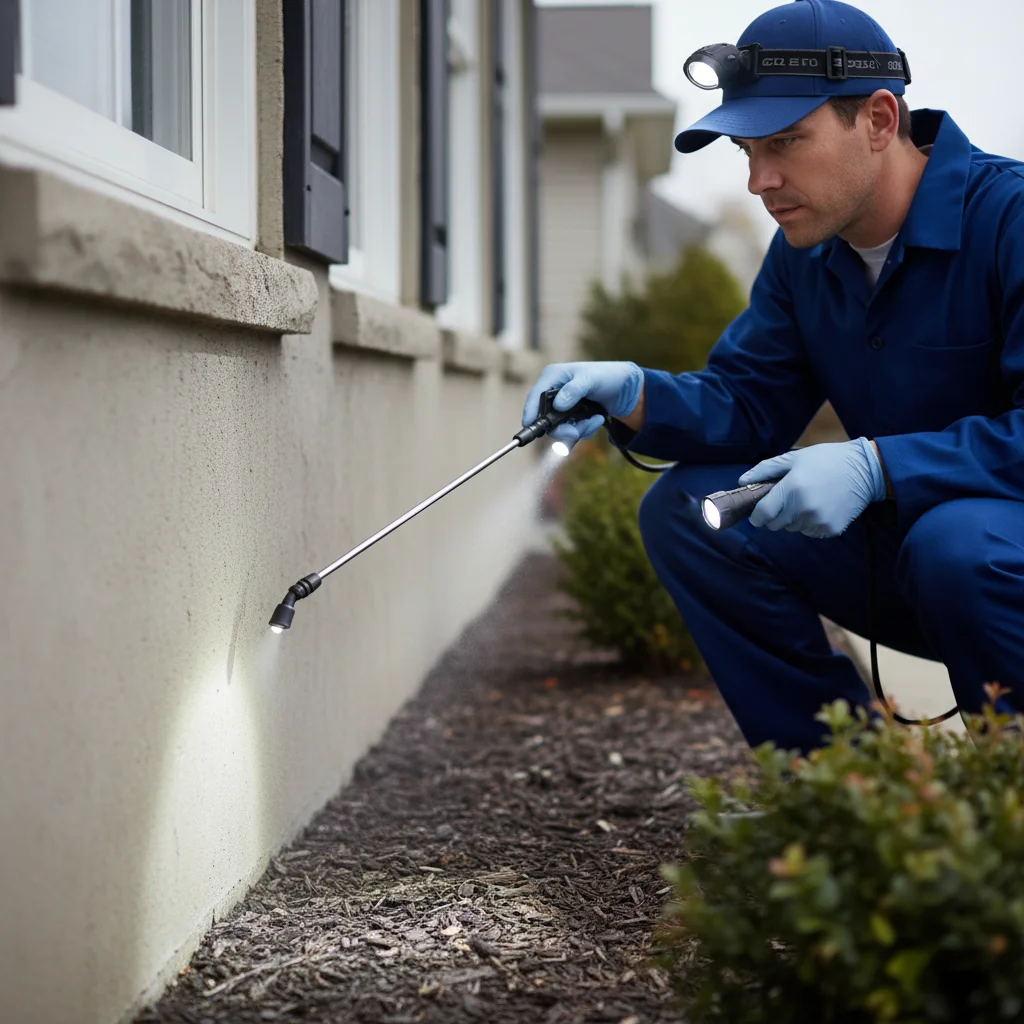
Non-repellent perimeter treatment blocks indoor ant access routes by creating invisible contamination zones that ants cannot detect or avoid. The process requires specific application patterns for maximum effectiveness:
Map entry points – Inspect foundation cracks, door thresholds, window frames, and utility penetrations where ants cross from exterior to interior spaces.
Apply 18-24 inch treatment band – Spray non-repellent product in continuous band around home exterior, covering both horizontal surfaces and vertical foundation walls.
Target moisture sources – Focus extra coverage around irrigation systems, air conditioning units, and landscaping areas where ants concentrate.
Create transfer zones – Treat ant trails and gathering areas where workers contact treated surfaces before returning to nests.
Schedule quarterly reapplication – Perimeter barriers require renewal every 90 days in Tracy climate due to irrigation, weather, and soil conditions.
Perimeter barriers require 18-24 inch treatment band and remain effective for 90 days in Tracy climate because the products transfer between workers through contact. Unlike repellent sprays that ants avoid, non-repellent treatments remain invisible to ant sensory systems.
Transfer effects multiply treatment impact. Contaminated workers carry residue back to nests where contact with nestmates spreads the treatment throughout colony networks. Queens and larvae receive exposure through grooming and food sharing behaviors.
Exterior perimeter non-repellent treatment works because Argentine ants follow predictable movement patterns between outdoor nests and indoor food sources. Contamination zones intercept these pathways without triggering avoidance behaviors.
When Do Ants Peak in Tracy? Seasonal Activity Patterns
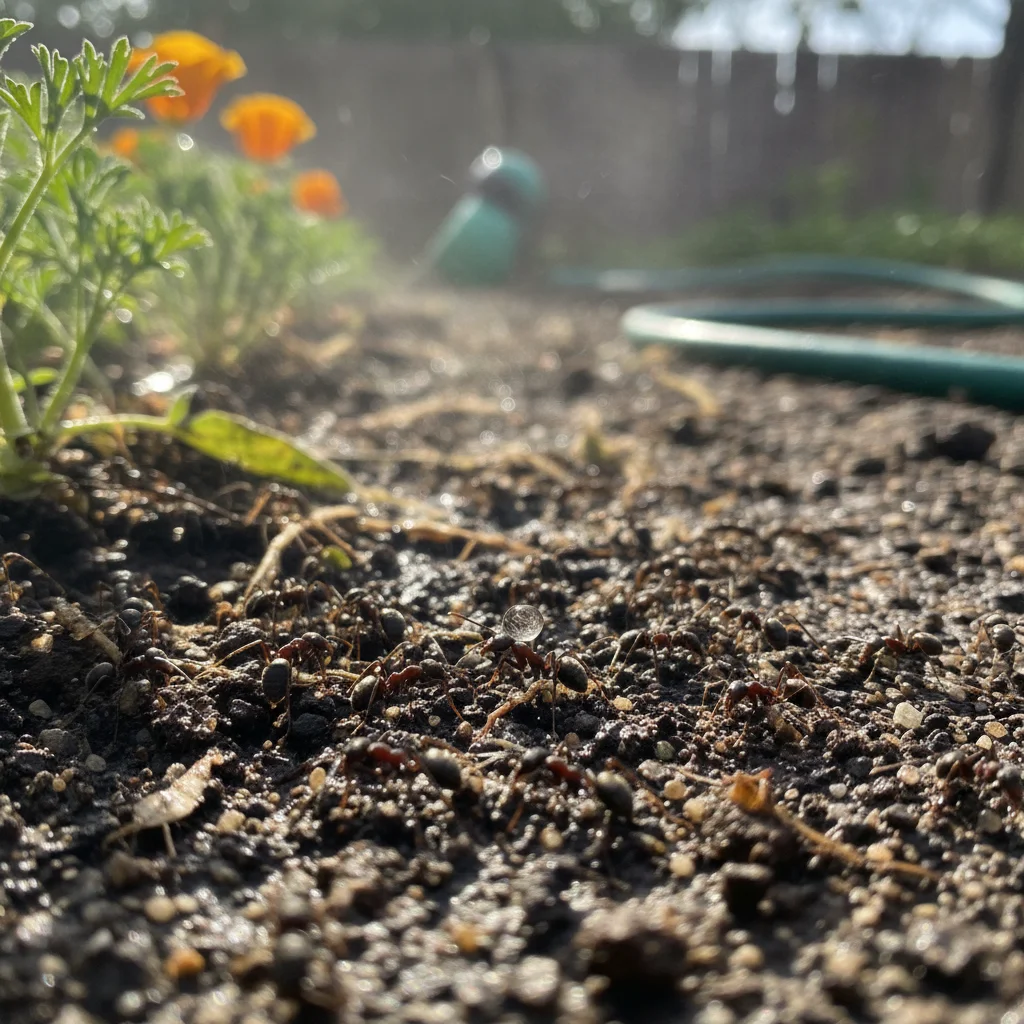
Irrigation cycles trigger peak ant foraging activity because water availability determines nesting site selection and colony expansion patterns. Tracy’s residential watering schedules create predictable surge periods:
- April-May surge – Ant service calls spike 340% when residential irrigation resumes after winter dormancy, flooding existing nests and triggering new colony establishment
- June-August plateau – Consistent irrigation maintains high activity levels as colonies expand into newly watered areas and food competition increases
- September-October secondary peak – Fall irrigation changes and landscape watering adjustments cause nest relocations and increased indoor invasions
- November-March decline – Reduced irrigation and cooler temperatures limit foraging activity, but colonies remain active during warm periods
Seasonal ant activity peaks correlate directly with Tracy’s dual irrigation seasons for landscaping and agricultural areas. Spring startup floods overwintered nests, forcing colony relocation into residential areas. Fall adjustments trigger similar displacement patterns.
Optimal treatment timing targets pre-surge periods when colonies are consolidated but not yet expanded. March treatments prevent spring establishment. August applications intercept fall relocation patterns.
Irrigation and ant nesting connection explains why hardware store treatments fail during peak periods. Flooded colonies spread across multiple properties, making localized treatment ineffective against network infestations.
What Should You Expect from Professional Ant Extermination?
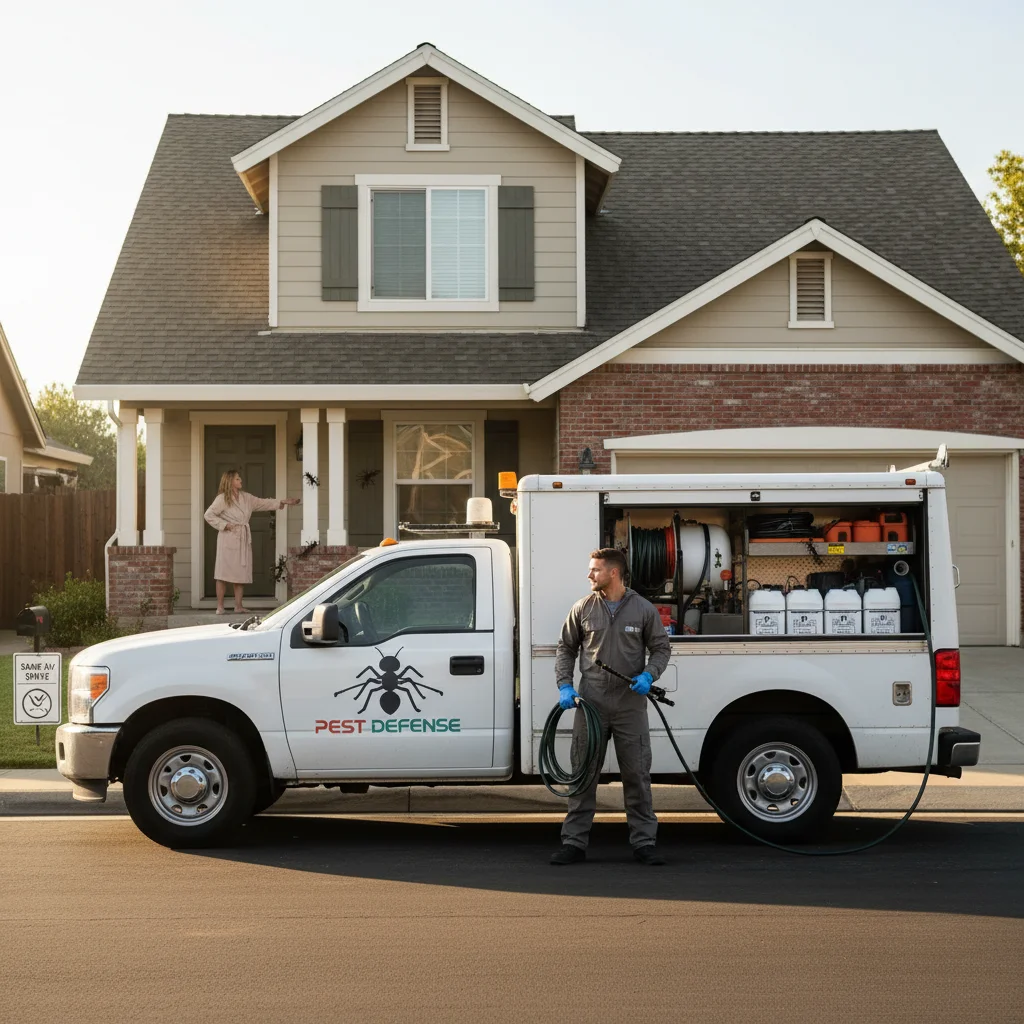
Same-day service addresses immediate ant invasion crises through rapid deployment of perimeter treatments and strategic bait placement. Most Tracy exterminators offer emergency response within 4-6 hours for severe infestations.
The service timeline follows predictable phases from initial contact through colony elimination. Phone consultation identifies ant species, infestation scope, and treatment urgency. Inspection visit maps trailing patterns, locates entry points, and determines colony distribution across property boundaries.
Treatment application combines perimeter barrier coverage with targeted bait placement based on species identification and seasonal activity patterns. Follow-up visits monitor treatment effectiveness and adjust application areas based on ant response patterns.
Quarterly maintenance plan provides ongoing prevention through scheduled perimeter renewal and seasonal treatment adjustments. Complete colony elimination typically requires 3-6 weeks with 2-3 service visits because Argentine ant networks need time to distribute treatment throughout satellite nests.
Realistic expectations include initial activity increase as disturbed colonies expand foraging efforts. Treatment success shows as declining trail intensity and reduced indoor invasions over 2-4 week periods. Guarantee policies typically cover retreatment if activity returns within 30-90 days.
Service calls peak during Tracy’s irrigation seasons when colony displacement creates emergency situations. Same-day availability decreases during April-May and September-October surge periods due to demand volume.
Frequently Asked Questions
How much does ant control cost in Tracy CA?
Initial ant treatment ranges from $150-$300 depending on property size and infestation severity. Quarterly maintenance plans average $80-$120 per visit for ongoing prevention. Same-day emergency service includes a $50-$75 premium.
Do ant exterminators in Tracy treat both indoor and outdoor nests?
Professional ant control targets both indoor trails and outdoor colony sources. Licensed exterminators apply perimeter barrier treatment around the home’s exterior while using indoor baits to eliminate entry points. Outdoor nest treatment is critical since 90% of the colony lives outside.
Can I get same-day ant treatment in Tracy California?
Most licensed exterminators in Tracy offer same-day service for severe ant invasions, typically available Monday through Saturday. Emergency response includes immediate perimeter treatment and bait placement. Full colony elimination still requires follow-up visits over 3-6 weeks.