

Expert Wasp Removal Tracy CA: Safe Wasps and Bees Nest Removal Services in Tracy, CA
Wasp removal Tracy CA becomes critical when agricultural activity and warm weather drive aggressive nesting near homes. Tracy homeowners face peak stinging insect activity from June through September, requiring professional pest control services Tracy CA to handle dangerous nest situations.
Key Takeaways:
- Paper wasps and yellow jackets require extermination while honeybees get relocated by licensed beekeepers
- Peak stinging insect season runs June–September in Tracy, coinciding with agricultural harvest activity
- Professional nest removal costs $150-$400 per nest depending on species and location accessibility
What’s the Difference Between Wasps and Bees in Tracy Homes?
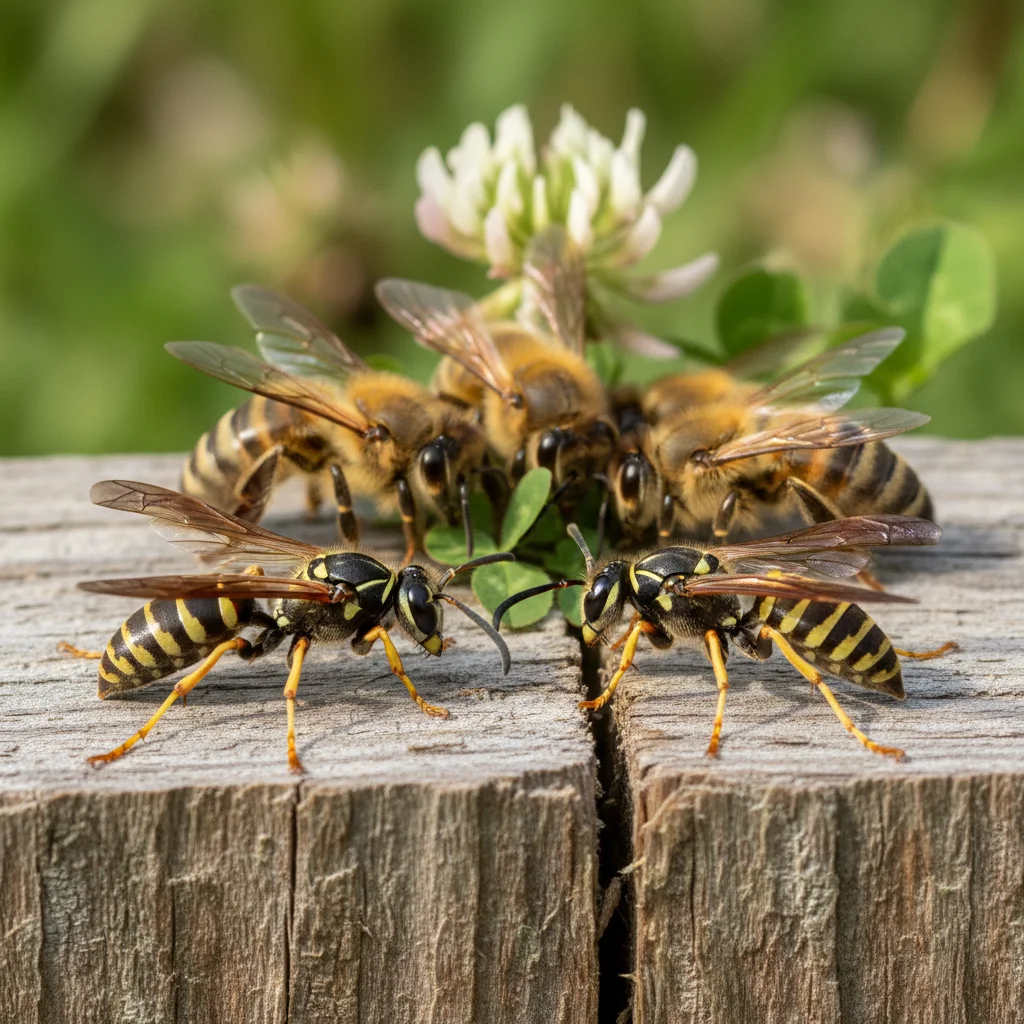
Paper wasps require extermination because of their aggressive territorial behavior around Tracy properties. Yellow jackets and paper wasps defend their colonies with repeated stings, while honeybees only sting once and die.
| Feature | Wasps | Bees |
|---|---|---|
| Body appearance | Smooth, bright yellow stripes | Fuzzy, brownish body |
| Diet | Meat, sugary foods, garbage | Pollen and nectar only |
| Nest material | Paper-like from chewed wood | Wax honeycomb |
| Aggression level | Highly aggressive, multiple stings | Defensive only, single sting |
| Nest reuse | Build new nests annually | Reuse hives for years |
A licensed exterminator can identify species by nest construction and insect behavior. Paper wasps build exposed umbrella-shaped nests under eaves and overhangs. Yellow jackets construct hidden nests in wall voids, irrigation boxes, or ground holes. Honeybees create wax combs inside tree cavities, walls, or structures.
Wasps scavenge for protein at barbecues and garbage cans. Bees focus on flowers and rarely interact with food preparation areas. This behavioral difference helps homeowners distinguish between species before calling for professional pest control Tracy CA services.
Where Do Wasps and Bees Build Nests Around Tracy Properties?

Tracy homes attract nesting in specific locations due to agricultural proximity and irrigation systems. Here’s where you’ll find colonies:
Equipment sheds and outbuildings – Paper wasps attach umbrella nests to protected overhangs where agricultural equipment provides shelter from wind.
Irrigation valve boxes and meter covers – Yellow jackets prefer ground-level cavities near water sources, making utility boxes prime nesting spots.

Deck railings and patio covers – Elevated structures offer protection while remaining accessible to food sources in outdoor dining areas.
Tree branches overhanging driveways – Large established trees provide natural anchoring points for paper wasp colonies within 10 feet of vehicle traffic.
Wall voids in homes built near agricultural land – Yellow jackets enter through small gaps in siding, creating hidden colonies inside wall spaces.
Eaves and soffits facing agricultural fields – These areas get morning sun exposure while remaining protected from afternoon winds common in Tracy’s agricultural zones.
A pest inspection identifies potential nesting sites before colonies establish. Yellow jackets prefer ground nests near irrigation systems while paper wasps choose protected overhangs on outbuildings. Both species avoid areas with heavy foot traffic but stay close to food sources.
Why Does Tracy See Peak Wasp Activity June Through September?
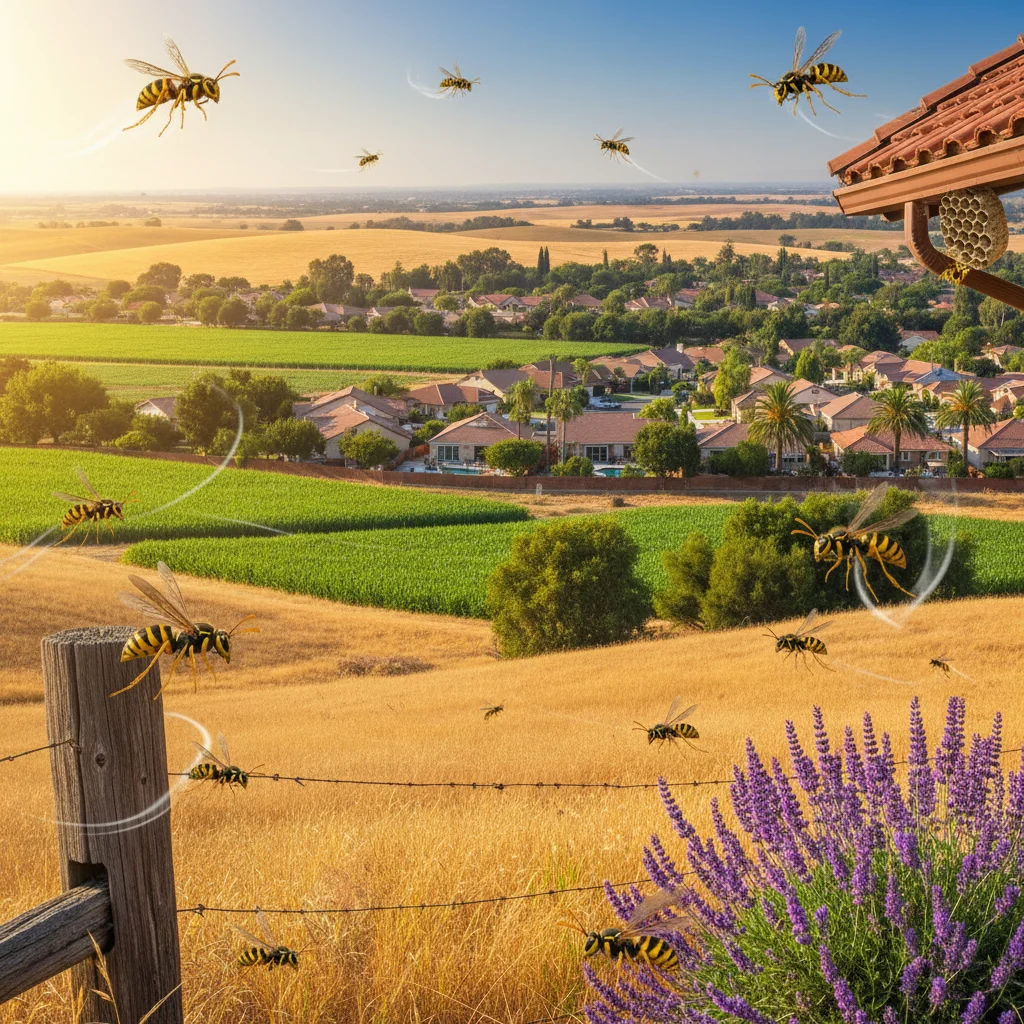
Tracy’s climate creates peak nesting season when agricultural harvest timing coincides with maximum colony growth. Wasp populations explode during summer months because food sources become abundant.
Agricultural fields surrounding Tracy residential areas provide protein from insects disturbed during harvesting operations. Fallen fruit from backyard trees and agricultural runoff create sugary food sources. Outdoor dining and barbecues increase human food availability.
Wasp colonies reach maximum size in August when agricultural activity provides abundant food sources. Queen wasps start new colonies in April, but worker populations don’t peak until late summer. By September, colonies contain 5,000-15,000 individual wasps compared to just 50-100 in May.
Temperature patterns keep wasps active longer in Tracy than coastal California. Interior valley heat extends foraging hours into evening while coastal fog limits activity in other regions. This extended activity period increases human-wasp encounters around homes.
A quarterly maintenance plan addresses nesting before peak season. Perimeter barrier treatments in March prevent establishment. Follow-up inspections in June catch early colonies before they reach aggressive maturity levels.
Should Wasps Be Exterminated or Relocated Like Bees?
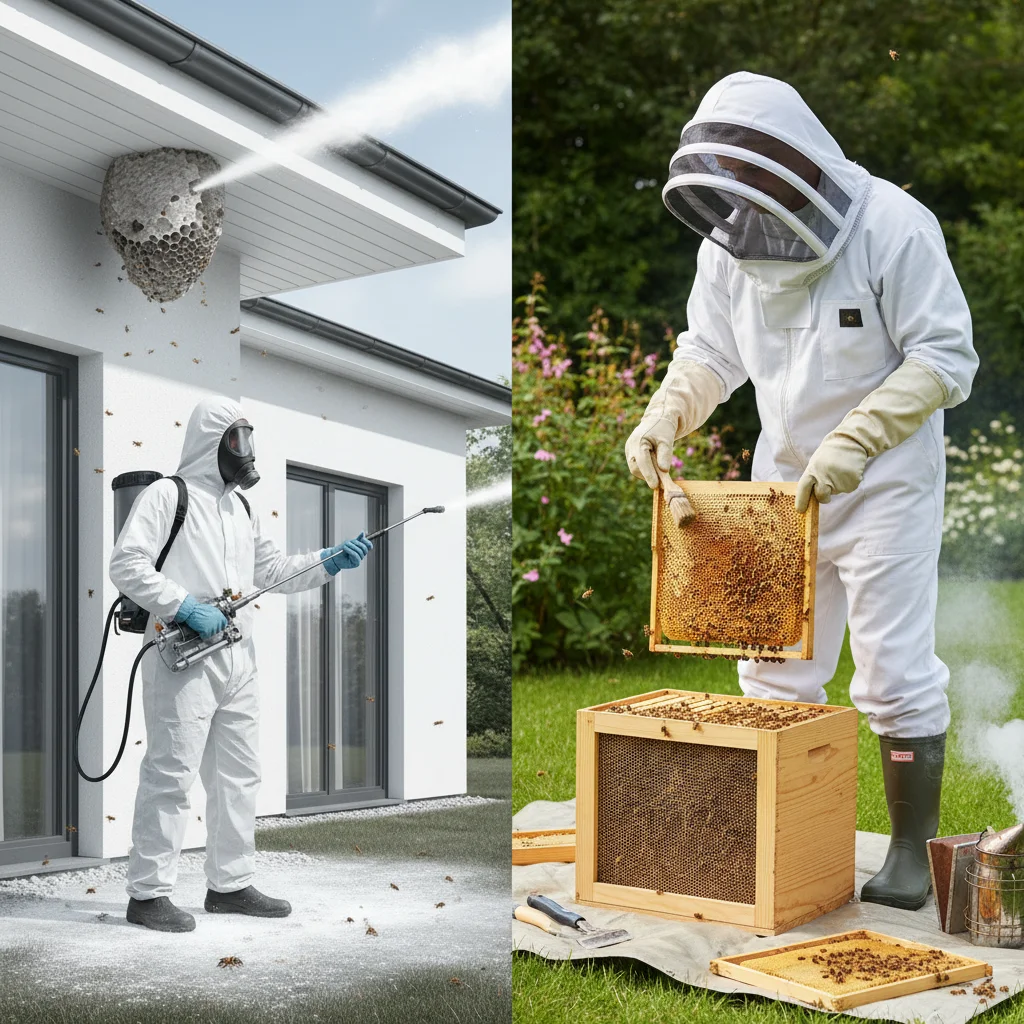
Honeybees get relocated while aggressive wasp species must be exterminated due to safety concerns and behavioral differences.
| Species | Treatment Method | Reason | Average Cost |
|---|---|---|---|
| Honeybees | Relocation | Protected species, non-aggressive | $300-$500 |
| Paper wasps | Extermination | Aggressive, defend territory | $200-$300 |
| Yellow jackets | Extermination | Extremely aggressive, ground nests | $150-$250 |
| Bumblebees | Relocation preferred | Beneficial pollinators | $200-$400 |
California law requires honeybee relocation when possible because these species provide essential agricultural pollination. Licensed exterminators work with beekeepers to safely remove honeybee colonies without killing the insects.
Wasp colonies cannot be relocated due to aggressive behavior and territorial instincts. Paper wasps and yellow jackets attack perceived threats within 10-15 feet of their nests. Moving a colony would trigger defensive responses that endanger both the insects and nearby residents.
Call a beekeeper for fuzzy brown insects building wax combs. Contact a licensed exterminator for smooth yellow and black insects creating paper nests. The wrong professional wastes time and money while leaving dangerous situations unresolved.
Gopher control Tracy CA professionals often encounter ground-nesting yellow jackets during lawn treatment operations. Bird control Tracy CA specialists also handle wasps nesting in roof areas where both services overlap.
What Safety Protocols Do Professional Exterminators Follow?
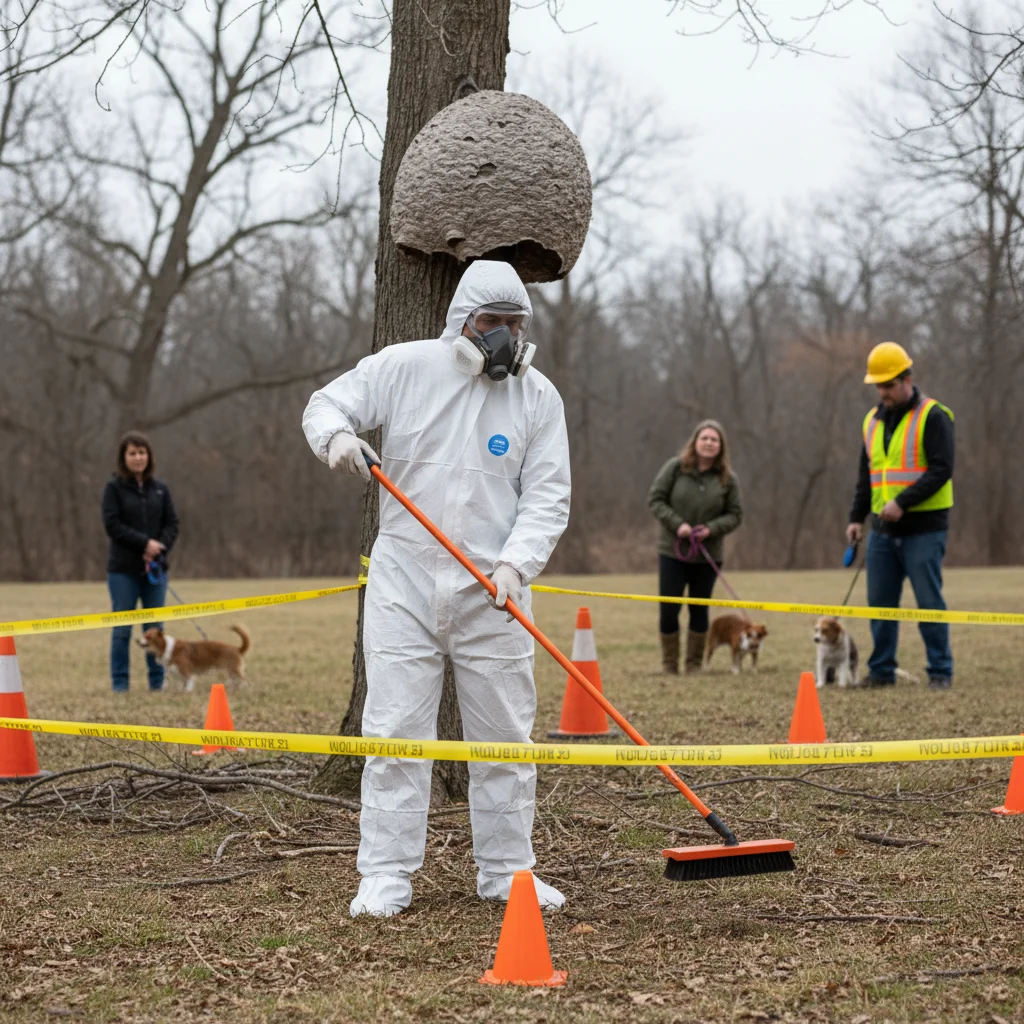
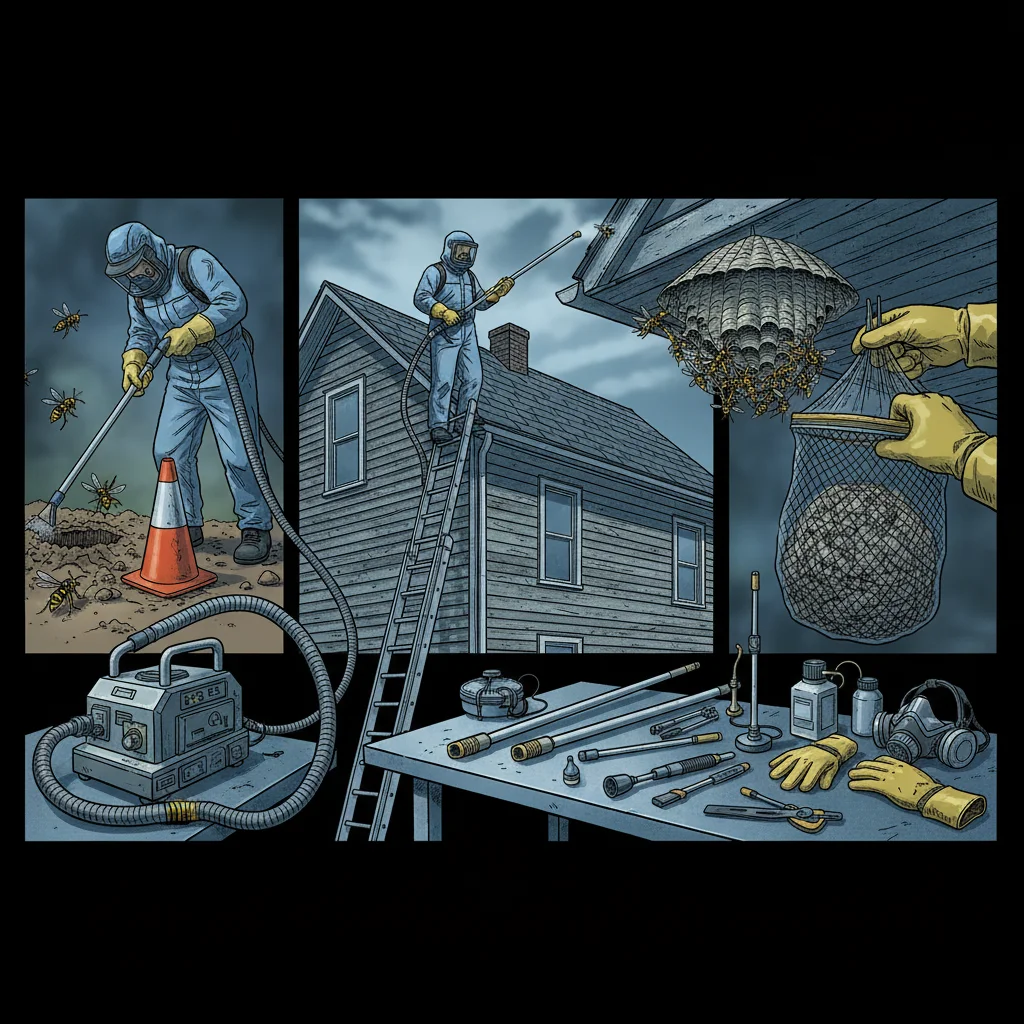
Licensed exterminators follow safety protocols to prevent injury during nest removal operations. Same-day service requires immediate safety measures.
Area evacuation and perimeter establishment – Clear all people and pets from a 30-foot radius around the nest site before beginning treatment operations.
Protective equipment application – Don full-body bee suits with sealed gloves, boots, and veils before approaching the colony site.
Colony activity assessment – Observe insect flight patterns for 10-15 minutes to determine colony size and aggression levels.
Treatment timing coordination – Apply treatments at dawn or dusk when foraging activity is minimal and most insects are inside the nest.
Chemical application procedures – Use targeted insecticide sprays directly into nest entrances rather than broad-area applications.
Emergency response preparation – Position epinephrine auto-injectors and maintain radio contact with emergency services during high-risk removals.
Post-treatment monitoring – Wait 24-48 hours before removing dead nests to ensure all insects have been eliminated.
Professionals treat wasp nests at dawn or dusk when colony activity is lowest for maximum safety. Daytime treatments risk aggressive defensive responses from returning foragers who weren’t in the nest during application.
Most best pest control companies Tracy CA maintain insurance specifically covering stinging insect incidents. This protection covers both technician injuries and property damage from defensive swarm behavior.
How Much Does Wasp and Bee Nest Removal Cost in Tracy?
Nest removal costs vary by species, location accessibility, and service timing requirements.
| Service Type | Cost Range Per Nest | Difficulty Factors |
|---|---|---|
| Ground yellow jacket removal | $150-$250 | Easy access, standard treatment |
| Paper wasp aerial nests | $200-$300 | Height access, protective equipment |
| Honeybee relocation | $300-$500 | Live removal, beekeeper coordination |
| Same-day emergency service | Add $50-$75 | Premium for immediate response |
| Wall void extraction | $400-$600 | Structural access, repair costs |
Location difficulty affects pricing significantly. Ground-level nests cost less than second-story removals requiring ladders or lift equipment. Wall voids require cutting access holes and subsequent repair work.
Same-day service premiums apply during peak season from June through September when demand exceeds capacity. Emergency calls typically incur a $50-$75 premium over standard pricing.
Perimeter barrier treatment adds $75-$150 to prevent re-establishment in treated zones. This application creates a chemical barrier that deters new colony formation for 90 days.
Seasonal pricing varies based on colony size and activity levels. Early season treatments in April-May cost less because colonies remain small. Late season removals in August-September require more chemical application and safety precautions.
Integrated pest management programs include wasp prevention as part of comprehensive property protection. Pest control Tracy Hills CA services often bundle stinging insect treatment with regular maintenance visits. Termite inspection Tracy CA professionals also identify structural vulnerabilities that attract nesting.
Frequently Asked Questions
Can I remove a wasp nest myself safely?
DIY wasp nest removal is dangerous and often ineffective. Professional exterminators have protective equipment and know when colonies are least active. Most DIY attempts result in multiple stings and incomplete nest elimination.
Do exterminators offer same-day wasp removal in Tracy?
Most licensed exterminators in Tracy provide same-day service for wasp removal, especially during peak season from June through September. Emergency calls typically incur a $50-$75 premium over standard pricing.
Will wasps return to the same nest location next year?
Paper wasps and yellow jackets do not reuse old nests, but they may build new nests in the same general area if conditions remain favorable. Perimeter barrier treatments help prevent re-establishment in treated zones.