

Norway Rat vs Roof Rat in California: Which One Is in Your Home?
Norway rat vs roof rat California identification changes everything about solving your rodent problem. You hear scratching overhead at 2 AM, but whether that’s a Norway rat in your crawlspace or a roof rat in your attic determines your entire control strategy.
Key Takeaways:
- Norway rats build ground-level burrows near water sources, roof rats live 4+ feet high in attics and trees
- Tracy’s agricultural edge neighborhoods see 70% Norway rats while established tree-lined areas see 80% roof rats
- Trap placement differs by 3-6 feet vertically between species, wrong placement cuts success rates in half
Most homeowners calling for rodent control Tracy CA services can’t tell these species apart. That’s a problem. Generic rat control fails because Norway rats and roof rats behave like different animals entirely. Getting species identification wrong wastes weeks of effort and hundreds of dollars on misplaced traps and wrong exclusion work.
The difference matters for pest control Tracy CA professionals too. We see homeowners who spent months fighting the wrong species with the wrong methods.
How Do You Tell Norway Rats Apart From Roof Rats?

Norway rats measure 7-9 inches body length with stockier builds and smaller ears. Roof rats appear more slender with larger ears relative to head size. The tail tells the real story.
| Feature | Norway Rat | Roof Rat | Key Difference |
|---|---|---|---|
| Body Length | 7-9 inches | 6-8 inches | Norway rats are bulkier |
| Tail Length | 6-8 inches | 7-10 inches | Roof rat tails exceed body length |
| Ear Size | Small, thick | Large, thin | Roof rat ears fold forward over eyes |
| Fur Texture | Coarse, brownish | Soft, dark gray to black | Norway rats have grizzled appearance |
| Weight | 12-16 ounces | 5-9 ounces | Norway rats weigh nearly double |
The tail-to-body ratio gives you the fastest way to identify Norway rat vs Roof Rat California pests. Norway rat tails never exceed body length. Roof rat tails always exceed body length by 1-2 inches. You can spot this difference from 10 feet away without handling the animal.
Norway rats have blunt snouts and small eyes. Roof rats have pointed snouts and large, prominent eyes. The ear test works best: roof rat ears folded forward will cover their eyes. Norway rat ears won’t reach.
Fur color varies by location, but texture stays consistent. Norway rats feel coarse and wiry. Roof rats feel soft and sleek. Both species show color variations from brown to black depending on local genetics.
Where Do Norway Rats vs Roof Rats Actually Live in Your Home?


Norway rats are ground-dwellers that burrow near water sources. This means they target basements, crawlspaces, areas under porches, and zones near plumbing. They rarely nest above 4 feet high.
Roof rats are vertical climbers that nest 4+ feet above ground. They prefer attics, wall voids, dense vegetation, and tree branches. Ground-level nesting is rare unless no elevated options exist.
This height preference drives different detection strategies. Norway rat signs appear near foundations, around water heaters, under decks, and along basement walls. Look for burrow openings 2-3 inches wide in soil or mulch. Fresh excavated dirt signals active colonies.
Roof rat evidence concentrates in attics, along roof lines, and near tree contact points. They travel on utility lines, fence tops, and tree branches. Entry points cluster around roof intersections, attic vents, and areas where vegetation touches structures.
Water access shapes both species’ territory selection. Norway rats need water within 100-150 feet of nesting sites. They colonize near leaky pipes, irrigation systems, pet water bowls, and drainage areas. Roof rats get moisture from fruit, vegetation, and condensation, allowing them to nest farther from direct water sources.
Seasonal patterns shift these preferences slightly. Winter drives both species toward heated areas, but Norway rats move deeper into basements while roof rats press closer to HVAC systems in attics.
What Signs Point to Roof Rats in Your Attic?
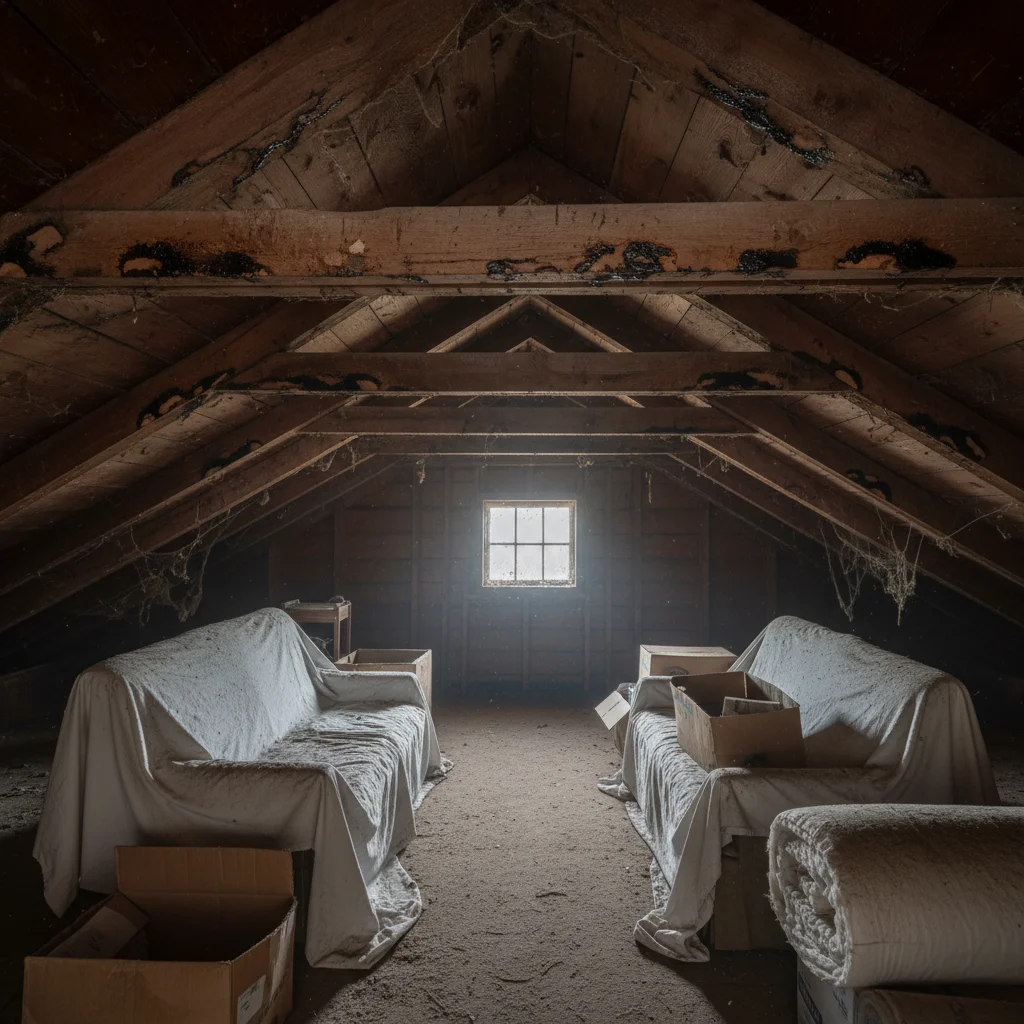
Roof rats leave distinct evidence patterns that separate them from their ground-dwelling cousins. Here’s what to look for during attic inspections:
Oily rub marks on rafters and beams. Roof rats have oily fur that leaves dark smudges along travel routes. These marks appear 4-8 inches wide on wooden beams, pipes, and wire conduits where rats squeeze through repeatedly.
Clustered droppings near insulation. Roof rat droppings measure 12-13mm long with pointed ends, found in clusters near nesting areas. Fresh droppings appear dark and soft, while old droppings turn gray and crumble when touched.
Gnawed electrical wiring with tooth marks. Roof rats gnaw constantly to control tooth growth. Look for parallel tooth marks 1/8 inch apart on wire insulation, wooden beams, and plastic vent covers. Fresh gnaw marks show light-colored wood or bright copper wire.
Shredded insulation formed into nests. Active nests contain shredded fiberglass insulation mixed with paper, fabric scraps, and dried plant material. Nests measure 6-10 inches across and feel warm to touch when occupied.
Scratching sounds between 11 PM and 4 AM. Roof rats are most active during peak night time hours. Sounds include scratching, gnawing, and light running footsteps across ceiling areas.
Seasonal pest activity peaks in fall when roof rats seek winter shelter. September through November shows the highest attic invasion rates in Central Valley locations.
Which Tracy Neighborhoods Get Hit by Each Rat Species?

Tracy’s geography creates distinct rat pressure zones based on habitat preferences. Agricultural drainage areas attract Norway rats while established tree-lined neighborhoods favor roof rats.
| Area Type | Dominant Species | Peak Season | Tracy Examples |
|---|---|---|---|
| Agricultural edges | Norway rats (70%) | October-December | South Tracy near canals |
| Tree-lined streets | Roof rats (80%) | September-November | North Tracy established areas |
| New developments | Mixed populations | Year-round | West Tracy housing tracts |
| Commercial zones | Norway rats (60%) | Winter months | Downtown Tracy business district |
South Tracy drainage areas attract Norway rats due to year-round water access and soft soil for burrowing. The Delta-Mendota Canal and surrounding agricultural irrigation create perfect Norway rat habitat. These areas see population spikes when field harvesting disturbs existing burrow systems.
North Tracy’s mature neighborhoods support roof rat colonies in established oak and fruit trees. Tree canopy coverage provides protected travel routes between properties. These areas experience roof rat pressure when citrus and nut trees produce fall crops.
Central Valley pest pressure follows predictable seasonal patterns. Norway rats migrate from fields toward residential areas during fall harvest disruption. Roof rats move from outdoor trees toward heated attic spaces when nighttime temperatures drop below 50°F.
New construction areas see mixed populations initially, but one species typically dominates within 12-18 months based on available habitat features.
How Does Trap Placement Change Between Rat Species?
Species-specific trap placement makes the difference between quick control and months of failed attempts. Here’s how to position traps for each species:
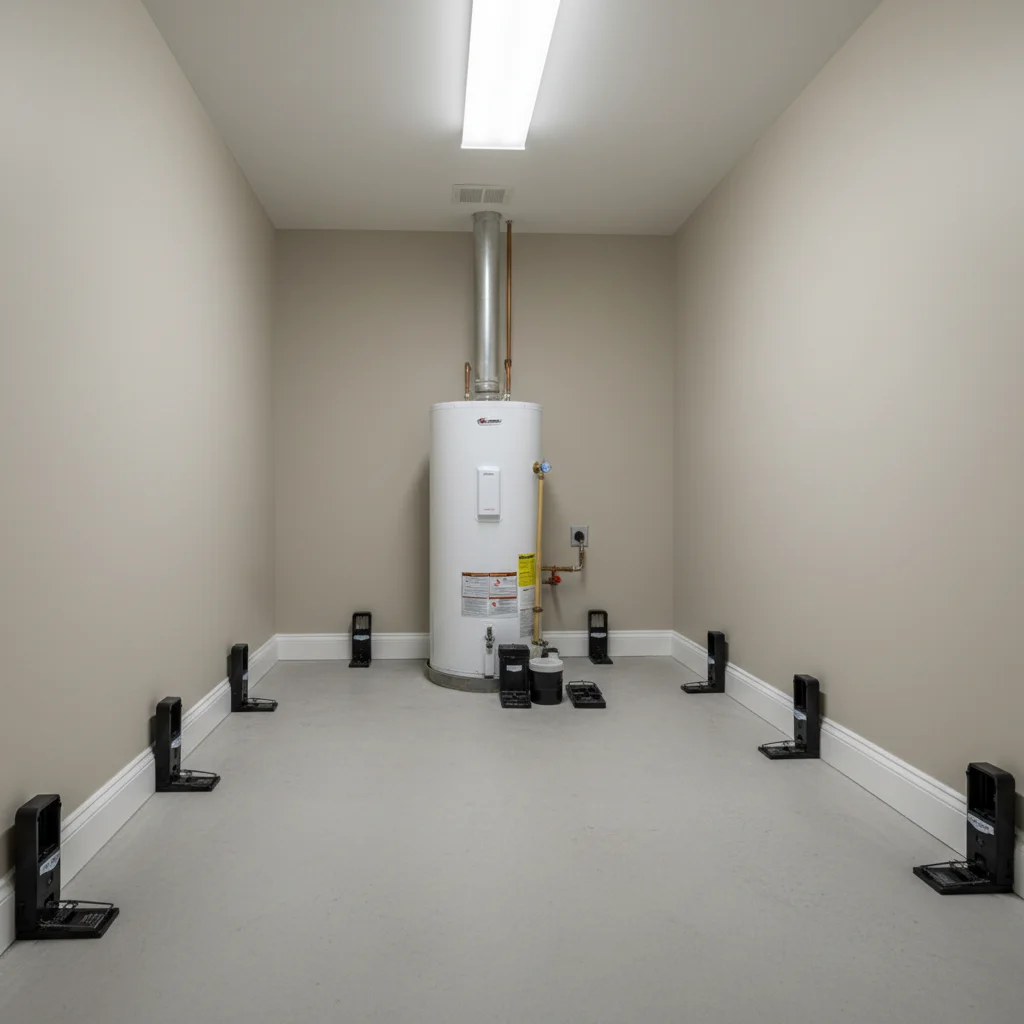
Place Norway rat traps at floor level along walls. Set traps against baseboards, behind appliances, and in corners where walls meet floors. Position within 10 feet of water sources like water heaters, washing machines, or pipe areas.
Mount roof rat traps 4-15 feet high along travel routes. Secure traps on rafters, along pipes, on top of wall plates, and near attic entry points. Use zip ties or wire to prevent traps from falling when triggered.
Bait Norway rat traps with protein-rich attractants. Peanut butter, bacon bits, dried meat, and dog food work best. Avoid sweet baits that attract more mice than rats.
Use fruit-based baits for roof rat traps. Dried fruit, nuts, citrus peels, and berries match their natural tree-dwelling diet. Fresh apple slices secured with wire work exceptionally well.
Space traps 6-10 feet apart along confirmed travel routes. Look for droppings, rub marks, and gnaw damage to identify active pathways. Both species follow the same routes repeatedly.
Check and rebait traps every 2-3 days for first week. Replace stale bait and move unsuccessful trap locations. Rats avoid areas that smell like dead rats, so remove and dispose of captures immediately.
Roof rat traps work best placed 4-15 feet high along travel routes, while Norway rat traps succeed at ground level within 10 feet of water sources. Wrong vertical placement cuts success rates by 50% or more according to pest inspection data.
Why Professional Rodent Exclusion Targets Different Entry Points by Species
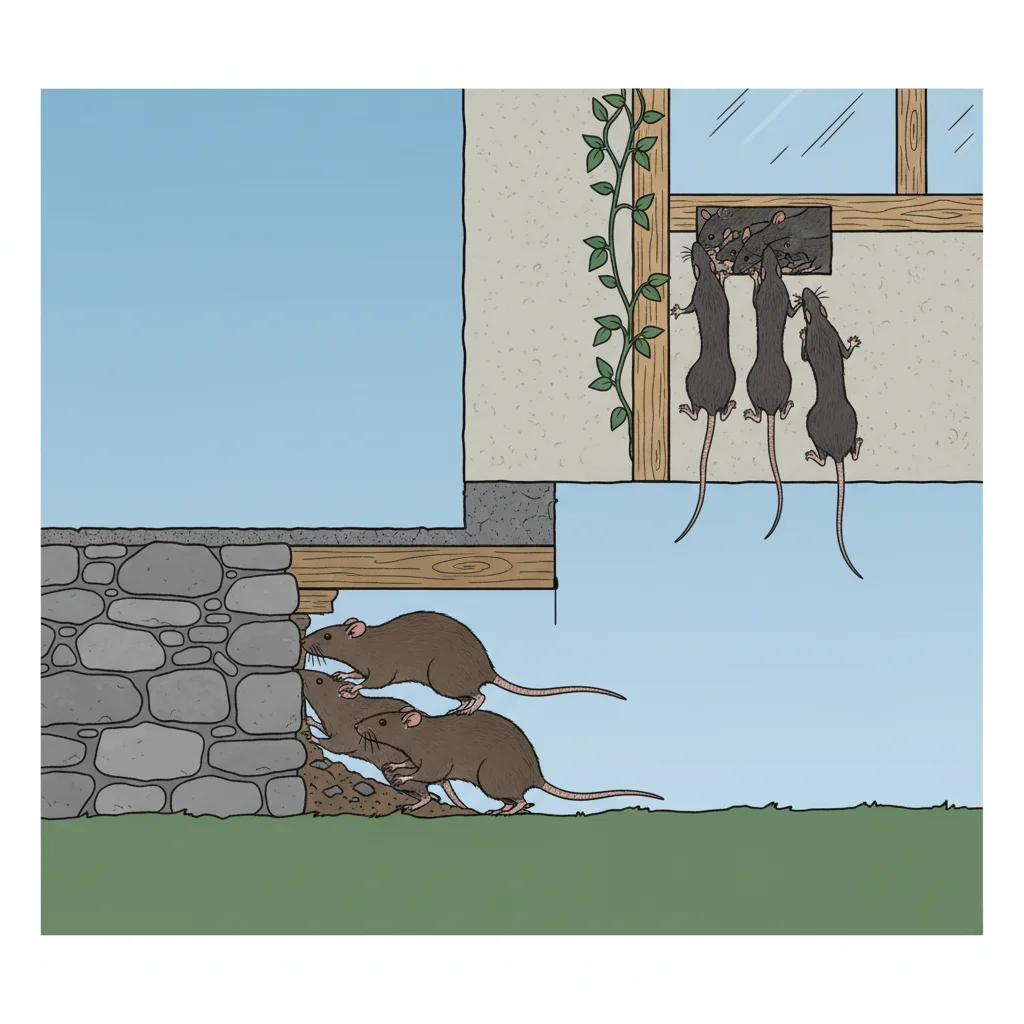
Rodent exclusion seals species-specific entry points that generic approaches miss. Norway rats and roof rats exploit different structural vulnerabilities based on their behavior patterns.
Norway rats squeeze through gaps 0.5 inches wide at ground level, targeting foundation cracks, gaps under doors, pipe penetrations through slabs, and openings where utilities enter basements. They dig under barriers, so exclusion work requires buried hardware cloth extending 12 inches below ground level.
Roof rats use gaps 0.5 inches wide along roof lines and tree branches, focusing on roof-wall intersections, attic vents, chimney areas, and points where tree branches contact structures. They climb vertical surfaces, so exclusion requires sealing access points 8+ feet above ground.
Foundation work stops Norway rats but does nothing for roof rats already living in attics. Roof line sealing prevents roof rat entry but won’t affect Norway rats tunneling under porches. Mixed infestations require both approaches simultaneously.
Professional exclusion combines species identification with targeted sealing. Norway rat exclusion emphasizes ground-level steel wool, concrete crack sealing, and door threshold gaps. Roof rat exclusion focuses on roof vent screening, tree trimming, and attic access point sealing.
Timing matters for exclusion effectiveness. Sealing entry points during peak breeding seasons (spring and fall) traps animals inside, creating bigger problems. Exclusion works best after population reduction through trapping removes existing colonies.
Generic sealing fails because it doesn’t match species behavior. Hardware stores sell one-size-fits-all solutions that miss species-specific entry patterns. Professional exclusion targets the actual access points each species uses based on their physical capabilities and habitat preferences.
Frequently Asked Questions
Do Norway rats and roof rats ever live in the same house?
They rarely overlap because they prefer different vertical zones and food sources. Norway rats dominate ground level while roof rats claim upper areas, but territorial competition usually results in one species driving out the other within 2-3 months.
Which rat species causes more damage to California homes?
Roof rats cause more structural damage because they gnaw electrical wiring in attics and walls, creating fire hazards. Norway rats cause more landscape damage by burrowing under foundations and irrigation systems, but pose less fire risk.
Can you use the same bait for both Norway rats and roof rats?
Bait preferences differ between species. Norway rats prefer protein-rich baits like peanut butter or bacon, while roof rats favor fruit-based baits like dried fruit or nuts that match their natural tree-dwelling diet. Wrong bait choice cuts trap success rates significantly.